
Two Months in Nepal
Some observations on 'the current situation,' with apologies to those who are here to read about writing and creativity.

Hello to all the new subscribers I’ve gained since the ructions of the Gen Z movement in early September. Many of you have come from news-and-views sites that have recommended me. My focus here tends to be on writing and creativity. I hope I don’t disappoint.
I do want to share some observations in this post from the two months I’ve spent in Nepal. (And I hope this doesn’t disappoint those who are here for posts on writing and creativity).
I arrived in Kathmandu two weeks after the ‘day of destruction’ on September 9 following the shocking police killings the day before in what was originally intended as a peaceful demonstration against corruption, poor governance, and bad (or horrendous, depressing, soul-crushing) political leadership.
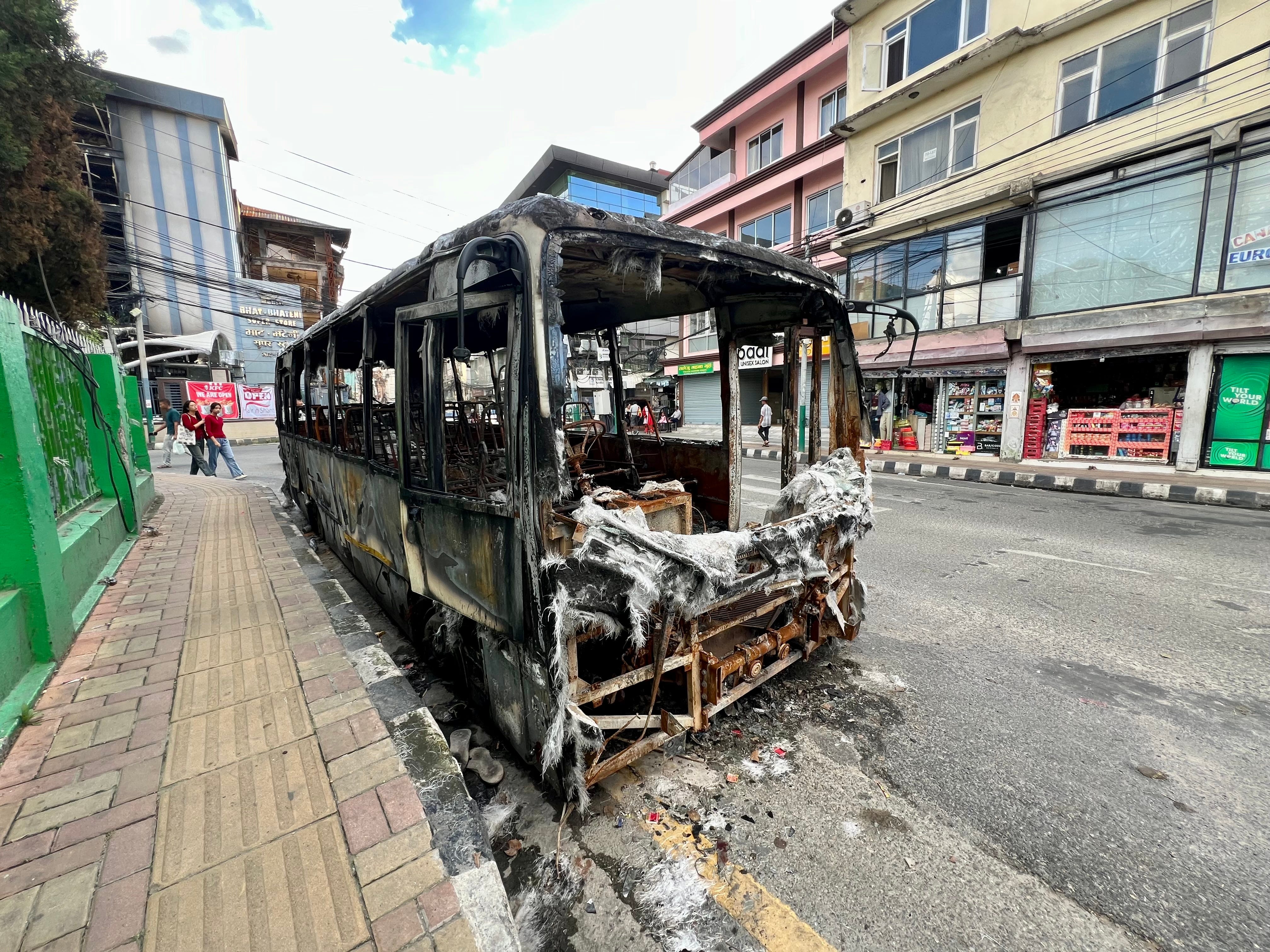
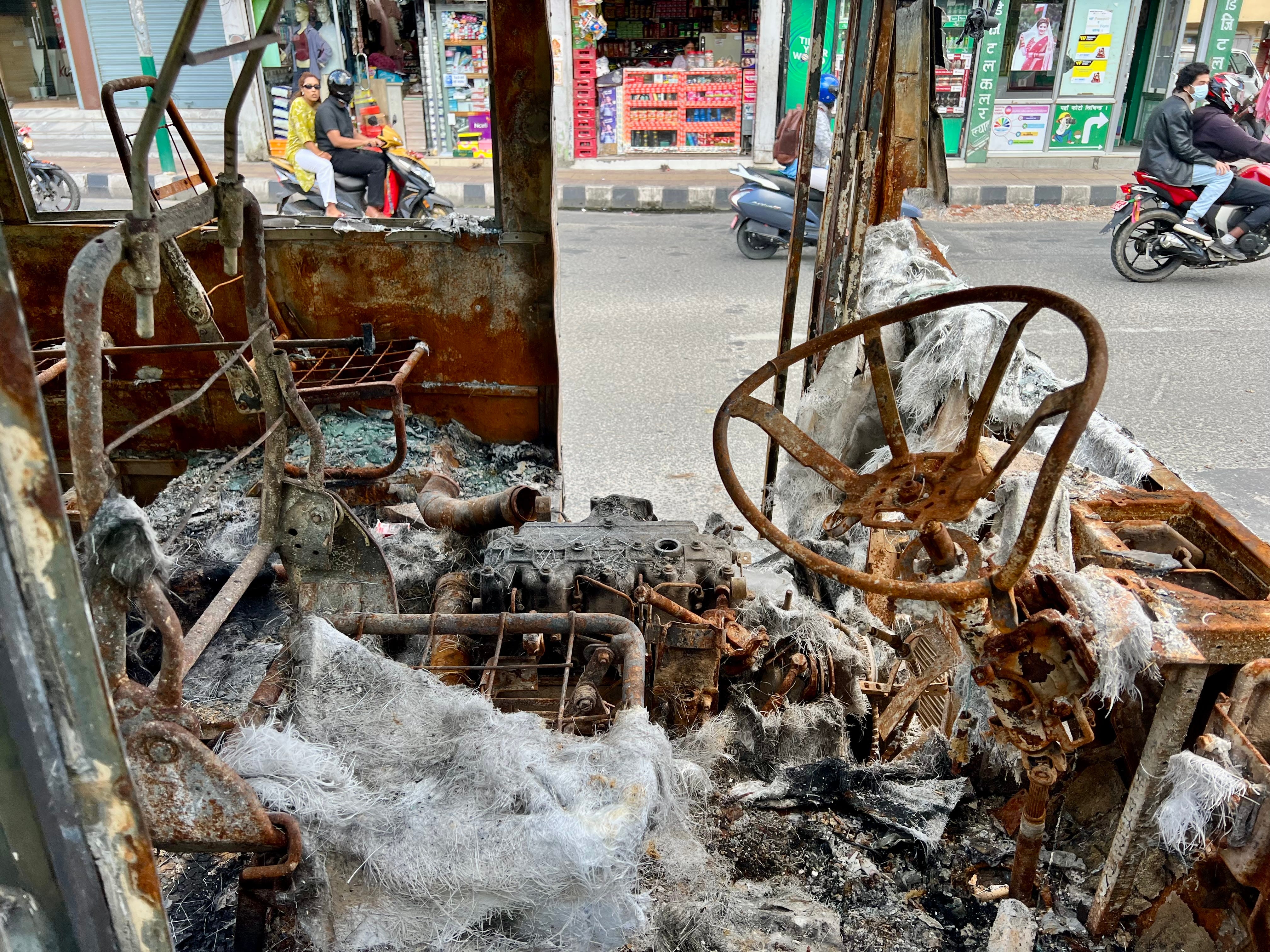
This had been the single most murderous day in the country’s history, which, it should be noted, has not been without its share of political violence. Victims from the police shootings were still in hospital. The remains of charred buildings and vehicles littered the city. Many were saying they didn’t feel like celebrating Dashain or Tihar this year. Gen Z activists, politicians, and the business community were all living in fear. The mood was sombre.
Still, when Dashain came around, the country mostly celebrated. (Prime Minister Sushila Karki refrained). When the rains stopped, people hit the road in what felt like record numbers, jamming up all the religious sites both on- and off-road. During my own trek with my partner to Nar Phu, I saw the mountaineering industry hard at work helping climbers summit Mount Himlung. When we crossed over Kang-la to the main Annapurna circuit trekking (and now also motorbiking) trail in Manang, we found the lodges crowded to capacity, mostly with Nepali travelers. Everyone—except for those who were suffering high-altitude sickness from having reached that elevation too fast—was having a great time.
Not even a month had passed since I’d arrived in Nepal. It was impossible not to be struck by the dissonance.
Back in Kathmandu during Tihar and Chhat, the revelries continued. But as they came to an end—and as the rains returned—a collective anxiety resurfaced. It was as though everyone understood that the crisis—as serious as any Nepal has ever faced—remained, and we would all have to return to it eventually.
Return we did. The weeks since then have been consumed with dialogue: dialogue between the many Gen Z factions, between them and the government, between and within each political party, in civil society, and—exhaustively—in both traditional and social media. As every group forms and reforms, and aligns and realigns with each other, it’s fair to say that the country is in upheaval.
Where will this upheaval lead?
Far be it for me, a non-resident Nepali on a family visit to my homeland, to predict.
But I’ll share the questions I’ll be asking in the coming months as I look for indicators of hope (an improvement on the pre-September 8 federal democratic republic, meaning: more democracy), disillusionment (a deepening constitutional crisis), or the usual-usual (the status quo):
Questions on justice: Will anyone up or down the chain of command be held responsible for the police brutality on September 8? Or will only perpetrators of the arson of September 9 be prosecuted? Whether or not Nepal moves towards justice and rule of law will ride on this. We’ve seen the transitional justice process following the 2006 peace treaty being stymied again and again by the security forces’ and political parties’ dogged pursuit of impunity for the perpetrators of atrocities. The TRC, as it stands now, is not even acceptable to the victims of the Maoist conflict. Many other smaller cases of injustice remain ignored. So it would be a good indicator if justice were to prevail in the atrocities committed during the Gen Z movement. That would indicate a true, historical breakthrough.
Questions on rule of law: Will anti-corruption and pro-accountability measures ever be acted on, or will they remain hidden away in unpublished government reports?
Questions on the political sphere: Will the three main political parties retire their discredited leaders KP Sharma Oli, Pushpa Kamal Dahal, and Sher Bahadur Deuba? Will they democratize internally? Will they root out their own corruption? Will they bring in new leadership that focuses on governance instead of only on power? So much is up in the air right now.
Questions on governance: Will governance improve, either before or after the elections slated for March 5, 2026? This improvement can come through administrative reform or through more responsible behaviour from the political parties in government after the elections. Let’s leave aside the latter for now—there are too many unknowns. In regard to the former, there has been some improvement already. An example came when the interim government simplified voter registration for those who already have national ID cards, saving them the cumbersome process that was in place previously. Service delivery immediately improved with this decision. So much public disillusionment with the state stems from the state’s dismal service delivery. I don’t think it would be unfair to say that many people feel that the bureaucracy seems to aim to make government work as hard as possible for Nepalis. Administrative reform is just as urgent as political reform. Will this happen?
Finally, the main question: Will the elections take place in the Spring? It’s not unusual for elections to be postponed by a few months. Even if March 5 elections prove unfeasible, April or May elections would give the country a way out of the constitutional quandary it’s in. But obstacles remain, mainly from the Communist Party of Nepal (Unified Marxist-Leninist)’s leader, the ousted Prime Minister KP Sharma Oli, who refuses to acknowledge the constitutionality of the interim government or to accept that there must be new elections. The Supreme Court is also hearing a case on the reinstatement of the parliament that was dismissed as per Gen Z activists’ demands. At this point, its decision either way will be as much about politics as about legality. It’s anyone’s guess how the justices will rule.
The reason all Nepali brains hurt right now is that each of these questions is connected to the others. The answers to one will directly impact all the others.
Is the current situation knotty and hard to untangle? Yes. But as a wise friend reminded me, it is also recognizably Nepali for all sides to tie each other up knots.
As all the actors who are directly involved work towards undoing these knots, life is returning to something like normal for everyone except the victims and the families of victims of September 8 and 9.
All the questions remain. They will be answered, satisfactorily or otherwise, in time.
Good to hear from you, Manjushree, and to read your articulation of these questions. What do you recommend as the best source(s) of news about Nepal?